
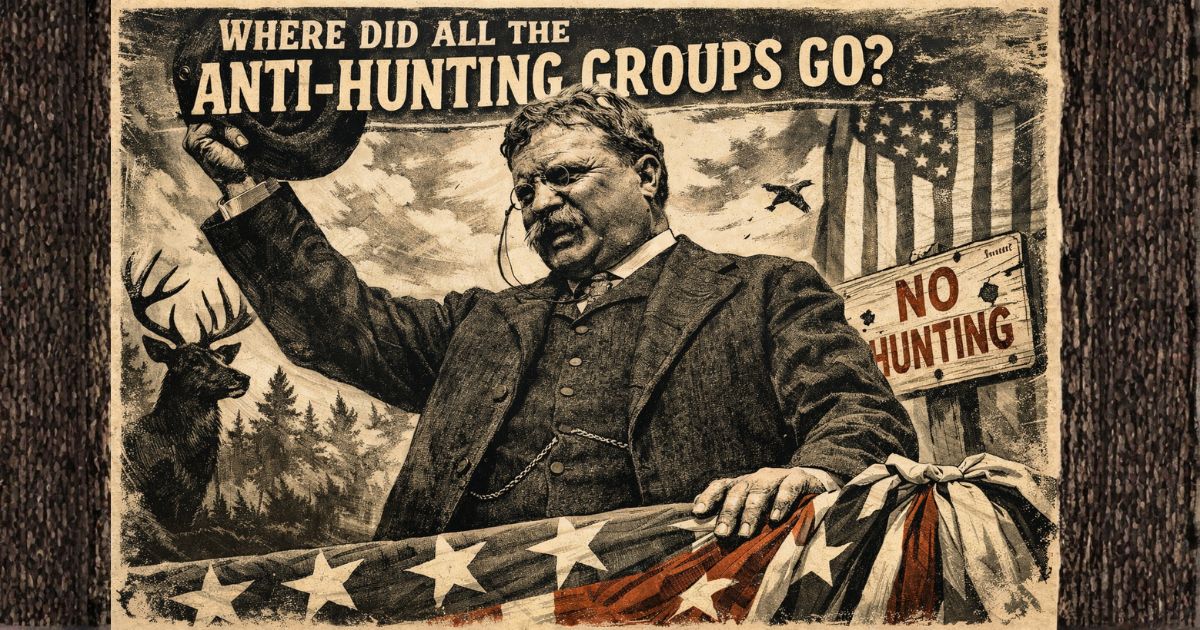
There was a time when conservation had big, bold leaders.
Men like Theodore Roosevelt — a hunter, a fighter, a President who believed wildlife had to be protected by the very people who used it.
We don’t really have giants like that anymore.
But here’s the truth — we don’t need giants.
We’ve got everyday folks.
Volunteers.
Banquet workers.
Habitat crews.
Guys and gals mentoring kids.
People starting new conservation groups like MNBOW.
That’s the legacy now. It’s us.
The Opposition Didn’t Disappear
Years ago, anti-hunting groups were loud. They protested. They held rallies. They made it clear they wanted hunting gone.
You don’t see as much of that anymore.
But that doesn’t mean they went away.
Sometimes opposition doesn’t show up with a sign.
Sometimes it shows up as delays.
As red tape.
As “policy.”
As silence.
It’s quieter now. But it’s still there.
A Personal Experience That Makes You Think
Recently, we tried to open a simple bank account for MNBOW.
Nothing fancy. Just an account to deposit donations.
The financial institution involved was Affinity Plus Federal Credit Union — a place I’ve worked with personally and commercially for over 30 years.
Seven months later, the account still isn’t open.
Seven months of:
-
Delay after delay
-
Hundreds of emails
-
Dozens of phone calls
-
Repeated paperwork
-
Strange and excessive questioning
In 30 years, I’ve never experienced anything like it.
So naturally, you start asking questions.
Is it just bureaucracy?
Is it inefficiency?
Or is there something about hunting and conservation groups that makes some institutions uncomfortable?
I don’t have proof of anything beyond what we experienced. But I know what normal looks like — and this wasn’t it.
And when it involves a hunting conservation nonprofit, you’d be naïve not to at least wonder.
Be Careful Who You Work With
Here’s the bigger point.
Just because you don’t see anti-hunting groups marching around doesn’t mean the pressure is gone.
It can show up quietly:
-
In boardrooms
-
In policies
-
In funding decisions
-
In how organizations treat conservation groups
Your dollars matter.
Where you bank matters.
Who you partner with matters.
Who you support matters.
Because if an institution quietly opposes what you stand for, there’s a real chance your money could be used in ways that work against your traditions.
Think twice.
Ask questions.
Pay attention.
We Are the Legacy Now
Roosevelt said wildlife can’t speak for itself.
That hasn’t changed.
We may not be famous.
We may not be presidents.
But every volunteer.
Every hunter.
Every conservation fundraiser.
Every person who mentors a kid.
We are carrying that torch now.
The opposition may be quieter.
It may be harder to see.
But our job is still the same:
Stand up.
Pay attention.
Protect our way of life.
And make sure we’re working with people and institutions that truly support conservation — not quietly working against it.
That’s the legacy.
And it’s ours to keep.